We’re excited to share some updates from a busy summer at Marine Mammals of Maine. We’re covering it all from updates on previous cases to unfortunate human interactions and so much more.
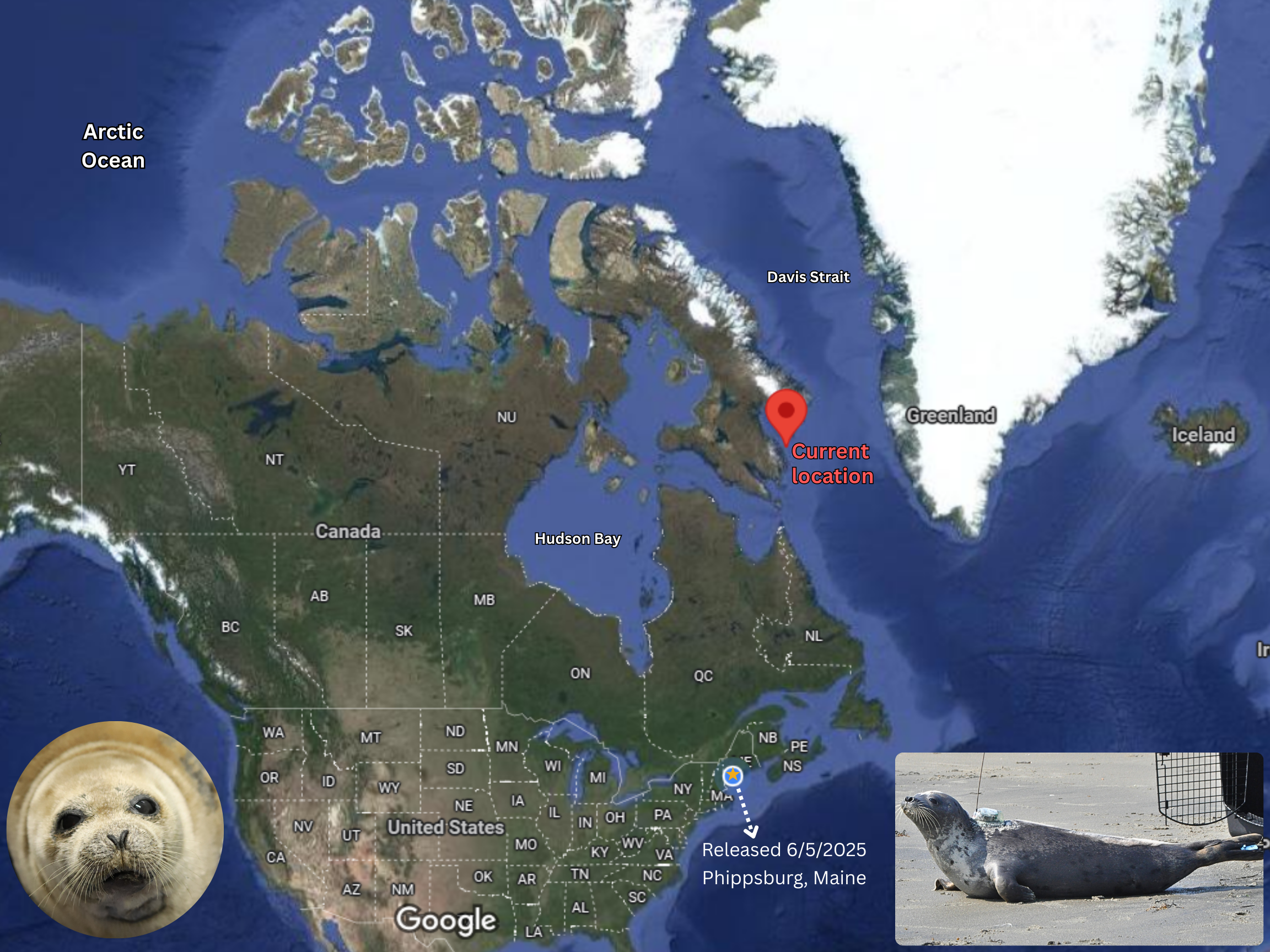
Post-Release Updates on 2 Unique Harp Seal Patients
|
|
Human Interaction Cases
Each year over 50% of our rehabilitation cases have experienced some form of human interaction. Earlier this year we reported on some notable responses including a nursing gray seal who was entangled in packaging material and a harbor seal who our team released from a mooring buoy.
In addition to an uptick in entangled seals, we’ve also recently been working with NOAA law enforcement on both seal and whale cases. There have been a number of live entangled free-swimming whales that have been reported to Center for Coastal Studies Marine Animal Entanglement Response team and NOAA that we have been notified of. Should these animals be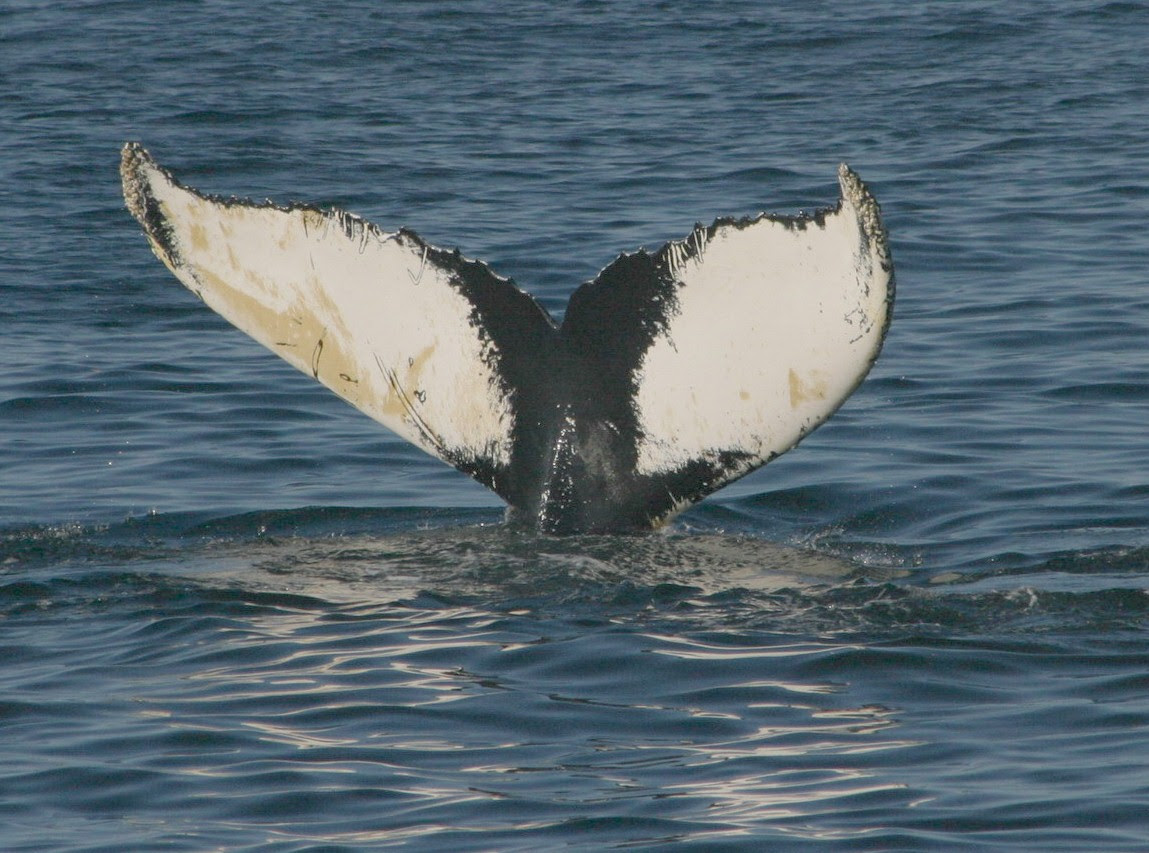 come stranded, or are resighted deceased, our role includes response to the stranding or post-mortem evaluations. In addition, we remain ready and available to assist disentanglement teams should that support be needed.
Many entanglement cases are extraordinarily complex, multi-day efforts that rely on a highly trained, specialized team of responders to successfully execute. MMoME is committed to offering a high level of expertise to both assist and learn as much as possible from each case as well as help inform our outreach efforts to reduce harmful human interactions.
Farewell Summer Interns and Patients
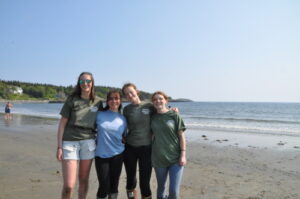 |
Each year our summer interns play a crucial role in our response, rehabilitation and community outreach activities and we could not have the impact we do without their efforts. We’re grateful for our 2025 interns, Elizabeth, Grace, Regina, Gracie, and Devon all of whom hope to continue working in the marine conservation field. |
Last week we also said goodbye to the last of our harbor seal pup patients of 2025. After our first summer unexpectedly serving as the only facility open to take in harbor seal pups in the Northeast, it was a tough 3 months of scrambling to think outside the box to take in more pups than anticipated. This isn’t the first time we have had to quickly come up with a plan to fill in new, or growing, gaps in coverage, care, or loss of resources for these animals. We know these efforts will continue as protections waver, funding and resource availability decline, and many marine mammal stranding, rehab, and research organizations are facing realities about how to continue this work.
With some shift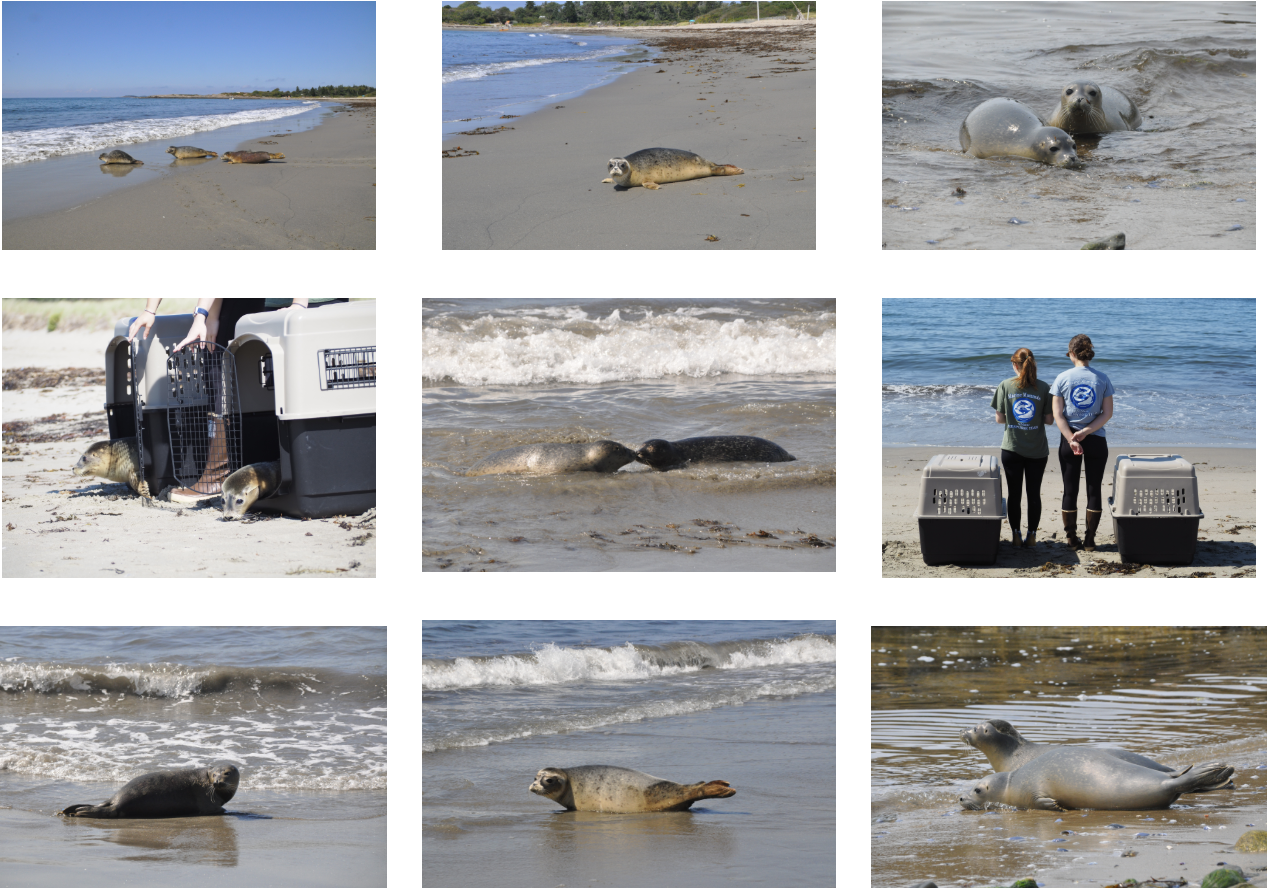 ing of enclosures, restructuring of our small staff team, rapid planning with NOAA to increase our capacity, and rallying our community to gather more funds and resources, we were successfully able to take in more sick, injured, and abandoned pups, often impacted by human interaction, from stranding organizations and an expanded territory. We still had to make some tough decisions as we couldn’t take in every pup in need, but thanks to supporters like you, many who would have had nowhere to go as a result of the sudden closure of a partner rehab center in Massachusetts had a team and a center open for them.
While all of our pups have now been released, we still have strandings and new seals in need of help. This time of year marks a change in ouractivities and the types of patients we typically respond to, with several recent admits of harbor seal weanlings that are dealing with illnesses and wounds requiring supportive care.
While not every seal is a good candidate for a public release, whenever possible to safely send these wild animals back home with you, we will share the public release announcement via social media platforms, and our email list!
Federal Update
Marine Mammal Protection Act
Earlier this year we wrote with an update about a hearing regarding the Marine Mammal Protection Act that took place in the House’s Natural Resource Committee. Representative Begich of Alaska has introduced a bill that would amend the Act in many ways that we feel would be detrimental to marine mammals. Read a summary of the proposed changes compiled by our friends at Whale and Dolphin Conservation here.
John H. Prescott Grant
MMoME receives no dedicated federal or state funding, though this competitive federal grant has historically offered critical support for our organization. Across the country organizations like ours, as well as service providers (like laboratories who process results allowing us to understand cause of death, impact of human interaction, disease surveillance, etc.) have relied on this funding to achieve our missions. Funding for this program, which we feel offers valuable and critical support to the entire stranding network, is at risk. More info.