We hope you enjoy this late winter update. We’re excited to share about some of our recent activities, patients, and fun upcoming events. Thank you for your support!
A Snowy Winter Made for Some Happy Harp Seals!
Winter is a unique season for seal strandings in Maine-the only time of year when all four seal species that inhabit the Gulf of Maine can be seen. While harbor and gray seals are year-round inhabitants, harp and hooded seals spend most of the year in the higher latitudes of the Western North Atlantic. In the winter, some harp and hooded seals migrate to the Gulf of Maine, and swim back north in the spring. Harp and hooded seals are known as ice-seals, which are species that depend on sea ice, snow, and cold temperatures to live. Even the harp seal’s latin name, Pagophilus groenlandicus, translates to ice-lover from Greenland, noting their affinity for winter weather.
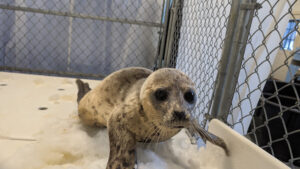
Ice-seals not only rely on ice and snow for resting, pupping, and molting, they also rely on it for hydration by consuming it. Maine winters with little ice or snow are known to be tough on these migratory species. While numerous factors contribute towards their strandings, lack of snow can lead to significant health issues, including dehydration. This winter, however, was a very cold and snowy one! As a result, we responded to a number of happy harp seals enjoying the frigid temps and consistent snow. Here are a few we checked on throughout our response region!
 |
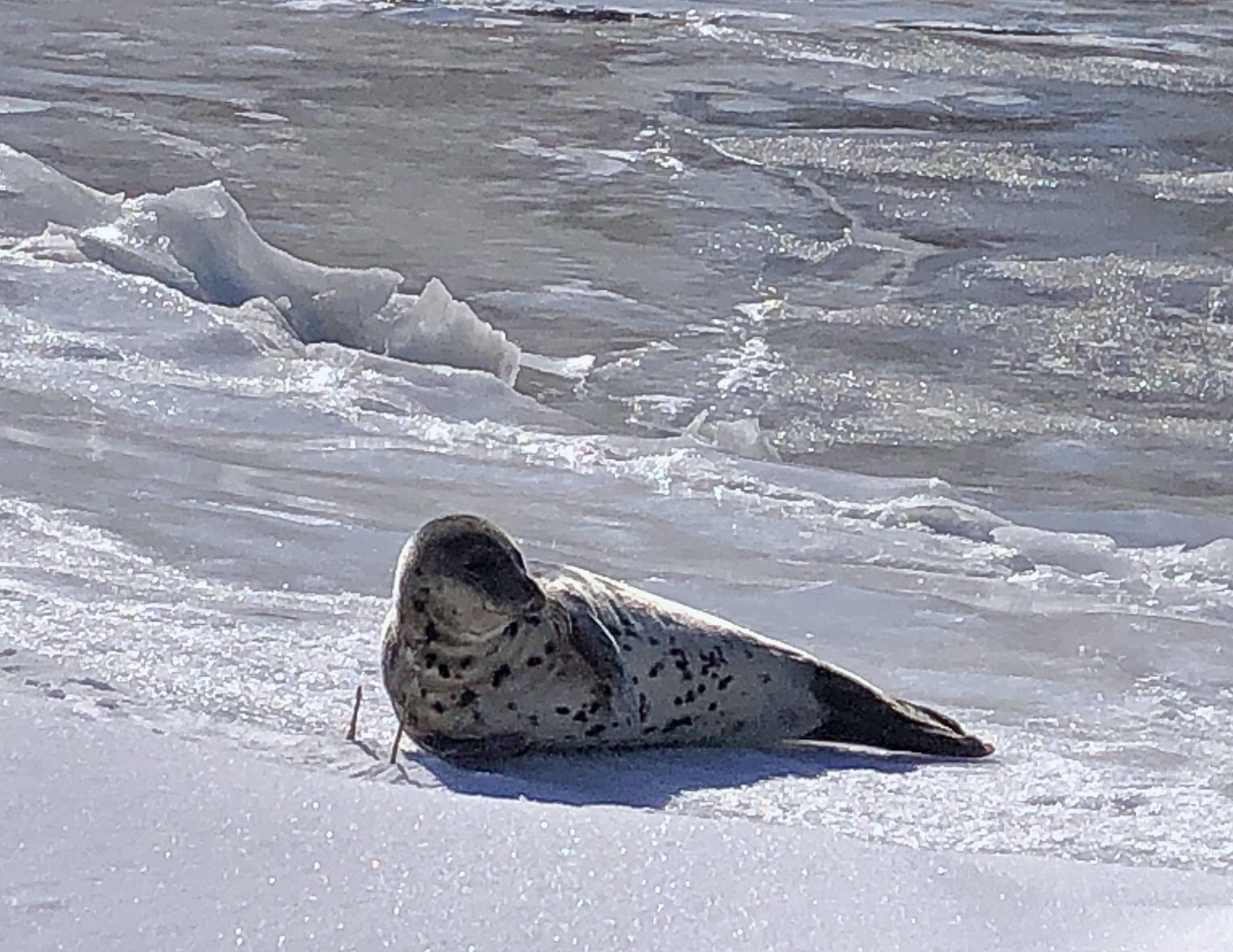 |
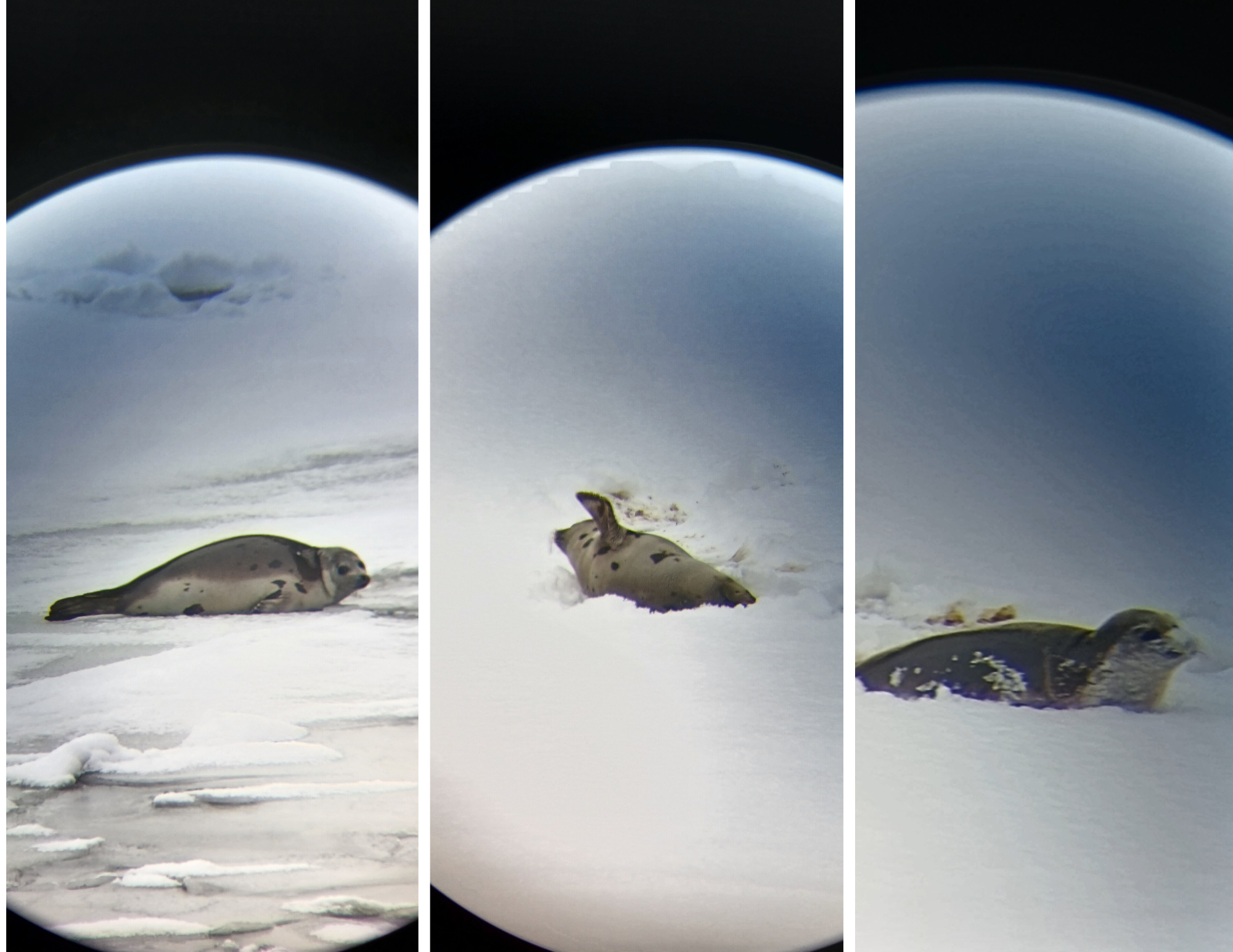
| The above harp seal was spotted on a frozen over cove and observed through a spotting scope exhibiting positive ice-seal behaviors: sliding in and out of the water through a hole in the ice, rolling in the snow, and burying its face in snow! | The above harp seal was reported to our hotline on the banks of a frozen cove. The response team watched from a distance as it ate snow and enjoyed the sub-zero temps. |
 |
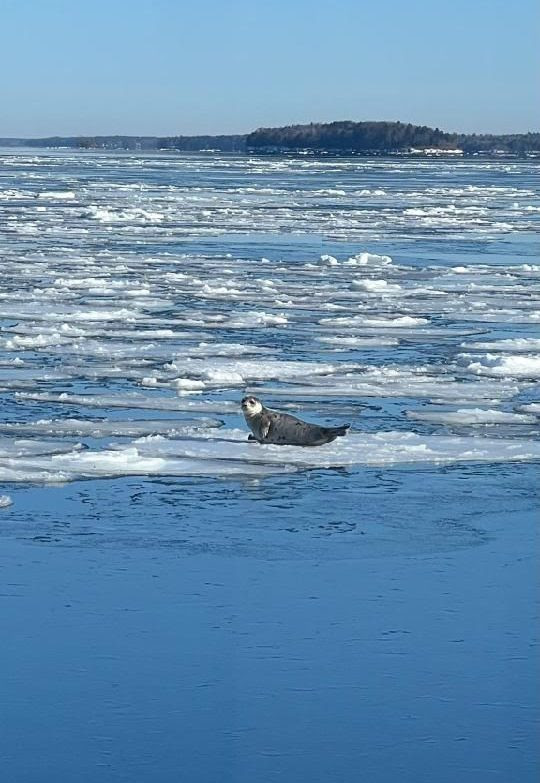 |
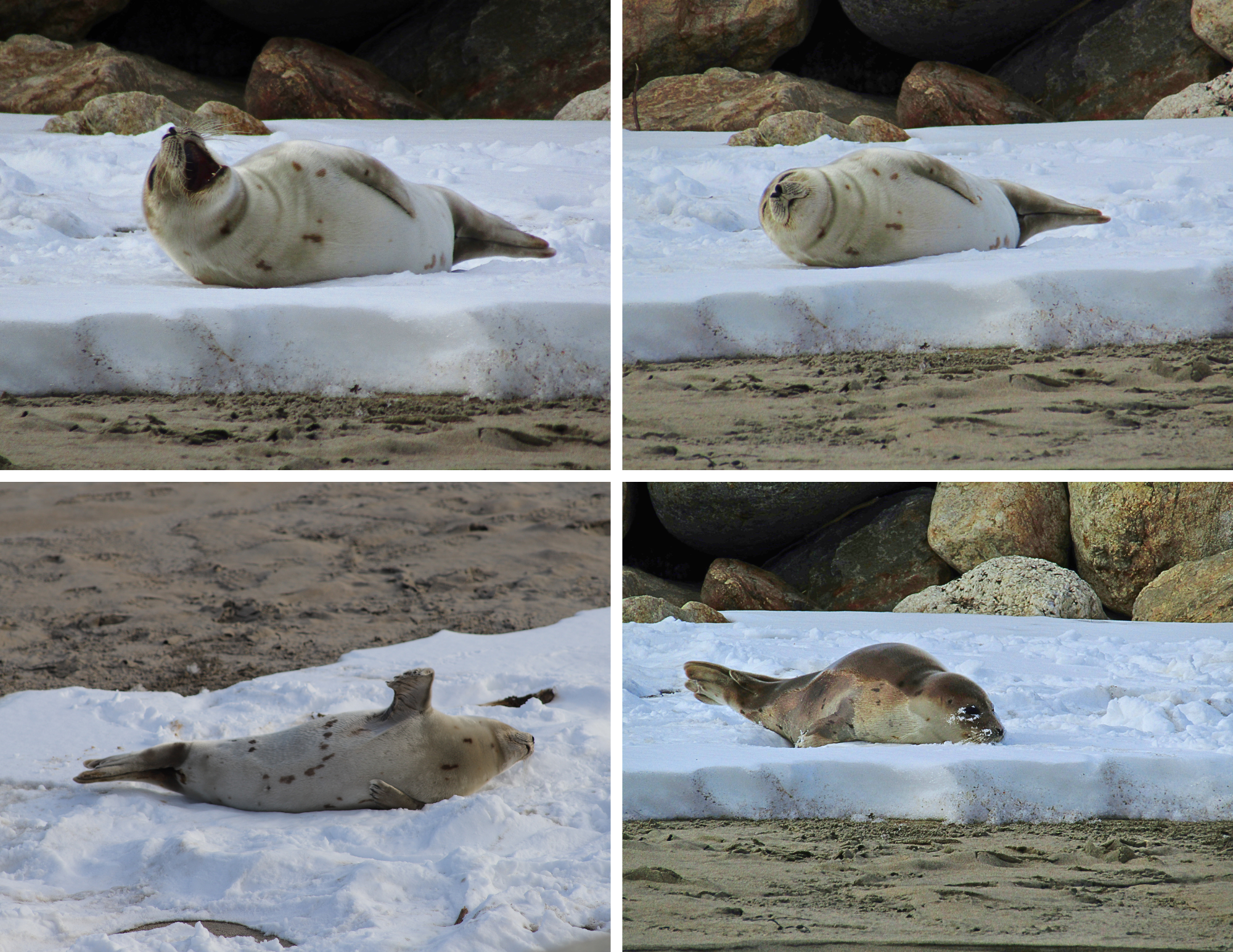
| The above harp seal was reported on Popham Beach in Phippsburg, Maine. Only part of the beach had snow cover, and this harp delibertly chose a patch of snow to rest and roll. | The above harp seal was spotted by a ferry passenger resting on floating pack ice in Casco Bay. This is what harp seals seek out in Arctic waters, so finding it here in coastal Maine was this little seal’s dream! |
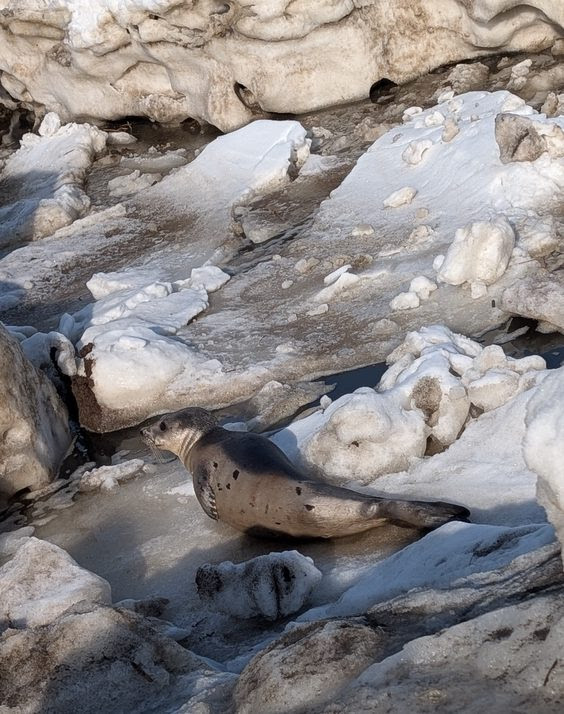 |
It may be hard to spot the harp seal in the photo to the left, but it had found the perfect spot in a frozen marsh to rest. We checked on it over a few days and continued to find it bright, active, and happily using the ice and snow for shelter. |
Preparation is the Name of the Game
The stranding world is necessarily unpredictable. We never know what the day will bring or what will be reported to our hotline or where. In order to ensure we are best able to respond to these unpredictable stranding events we spend a great deal of time preparing for any number of situations that could suddenly arise. Here are some recent examples.
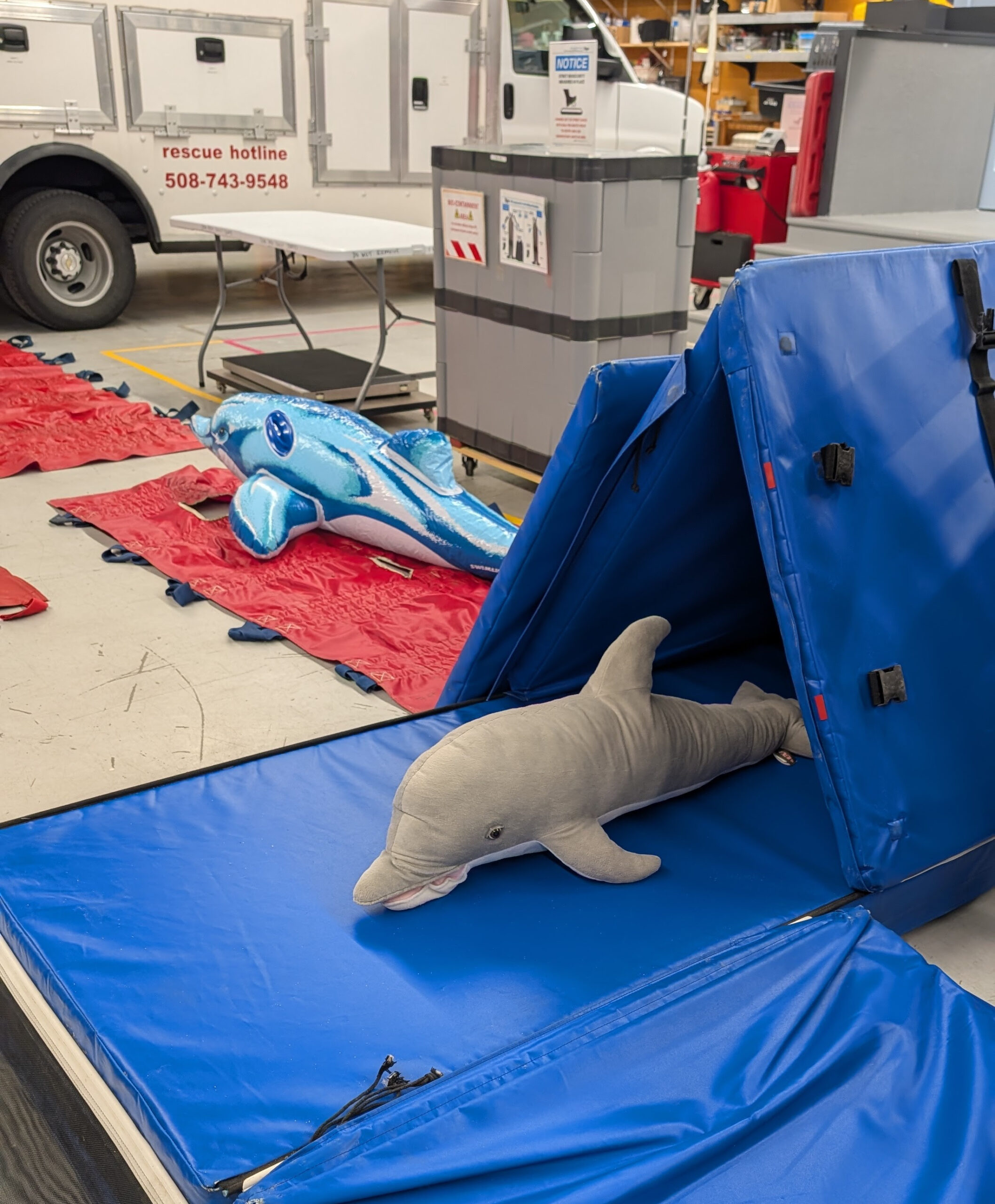 In March, four of our team members traveled to the International Fund for Animal Welfare facility on Cape Cod to learn from this marine mammal stranding network partner about cetacean (whale, dolphin, porpoise) strandings. In total, 12 different stranding response organizations came together to share knowledge and experience working with some of the most difficult (logistically, physically, financially, and emotionally) types of strandings. We were fortunate to confer with others in this field about various scenarios we’ve encountered and what we can learn from past events to improve our responses. In particular, topics related to providing fast, efficient, and humane responses to live stranded cetaceans in the face of minimal resources was highlighted. We also discussed data-informed health metrics to guide decisions relating to humane euthanasia, or successfully refloating strandings. The knowledge and connections gained, and inspiration fostered from this training will aid our own activities as part of our ongoing commitment to continuous improvement of animal welfare.
Year round we monitor for diseases that contribute to marine mammal morbidity and mortality. The two most recent Unusual Mortality Events (UMEs) impacting seals in our response region have been attributed to infectious diseases, specifically phocine distemper virus (PDV) in 2018 and Highly Pathogenic Avian Influenza (HPAI) in 2022. Monitoring these viruses in tandem with historical stranding trends allows us to quickly identify anomalies to prepare as needed for these events.
We have been working with Dr. Kristina Cammen at the University of Maine to bolster scientific understanding of PDV for several years. This virus is cyclical in nature and we can anticipate large numbers of strandings due to PDV again in the future. With our dataset running from 2016-2025 we now have one of the longest running continuous datasets for PDV to our knowledge. With Dr. Cammen we can use this data to proactively monitor PDV trends and help inform when we may see spikes in strandings, and quickly coordinate response plans.
In 2022 HPAI crossed over into seals for the first time documented in the United States in MMoME’s response region. Our robust tracking of strandings along with diagnostic sampling allowed us to quickly identify this virus, for which there is currently no treatment for any species of wildlife impacted by it. It is imperative that we carefully monitor the spread of HPAI in wildlife (like these recent cases in Northern Elephant Seals in California) for wildlife, and human safety.
Southern and Midcoast Maine (MMoME’s stranding response region) served as the epicenter for both of these virus outbreaks, though their impacts were seen throughout New England (and have been documented globally in other events). MMoME’s response region continues to be a hotspot for marine mammal, and in particular, seal activity, indicating the importance of this habitat and the need for continued close monitoring-for the wildlife and humans.
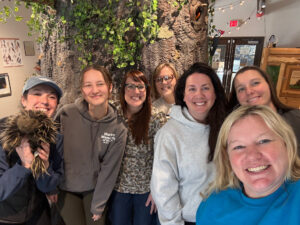 Before our busiest time (harbor seal pup season!) comes back around again, the MMoME team spent a morning with Center for Wildlife-a private non-profit organization in York, Maine whose work includes wildlife rehabilitation and education to cultivate and strengthen relationships between humans, wildlife, and the environment. MMoME and CFW’s Executive Directors and Development Coordinators sat down together to share experiences, good and bad, running wildlife conservation organizations, and navigating the tricky ways to not only keep our doors open, but also expand to meet the growing needs of our communities and the wildlife within them.
We are so grateful for CFW’s incredible work and the opportunity to hear about their successful growth. Our time with their team only solidified the amazing wildlife conservation community we are a part of.
Where Is She Now?
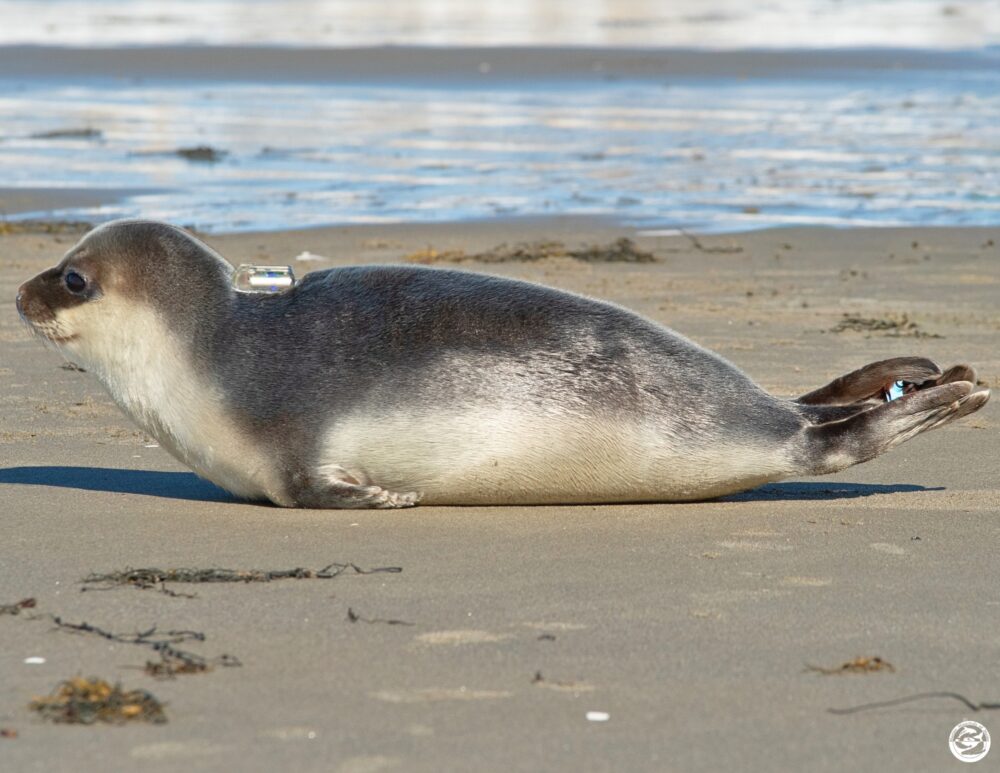 In January we responded to a yearling hooded seal-a less frequently seen species in the Gulf of Maine (the last one we documented was in 2018). After a field assessment on Chebeague Island, she was admitted for care, and a little over a month later, she was cleared for release. Her full story with rare footage of this amazing species will be highlighted in next week’s Friday Night Video!
What makes this release of a rare Gulf of Maine species even more important is the non-invasive satellite tag she is wearing. The data it is already providing fills a critical data gap for this poorly understood species in the southern-most range of its habitat. Thanks to this tag from NOAA’s fisheries science center, we will learn more about where she goes, how she uses this part of her species’ habitat, as well as the post-release success of her stranding and rehabilitation. You can follow along with her movements here.
The majority of our patients this winter have been admitted from Nantucket, which is an impact of the closure of the seal rehabilitation facility in Massachusetts last year. We are thankful that we’ve been able to help these animals with your support! We are still caring for some winter patients who are rapidly gaining weight and using lots of supplies. If you’d like to support their care we are especially in need of laundry detergent, Simple Green, and paper towels (along with a number of other needed items) which you can find on our wish list.
 Join Us At Upcoming Events!
Spring is coming, and with it lots of opportunities and events to help us prepare for and celebrate harbor seal pup season- our busiest time of year!
April 1- April 19- Wild Oats in Brunswick is offering a special Salted Seal iced latte, of which 100% of proceeds will be donated to MMOME. Stop by for this salted caramel treat and support seals at the same time!
April 18- Wells Beach Cleanup.
April 19- Pup Shower at Wild Oats in Brunsiwck. Stop by for games, trivia and more. This event helps us to restock the clinic for our busy summer season.
April 25- Seal Day with the Portland Sea Dogs.
We’ve also got lots of library talks and other events planned and in the works. Visit our events calendar to see everything that’s going on.
And finally, March 22 is International Seal Day. Every day is seal day at MMOME, but if you’re looking for a way to help the seals on this day in their honor, consider
helping to keep marine mammals safe and healthy by preventing unnecessary debris from entering our waterways and oceans. Every bit of debris properly disposed of makes a difference.